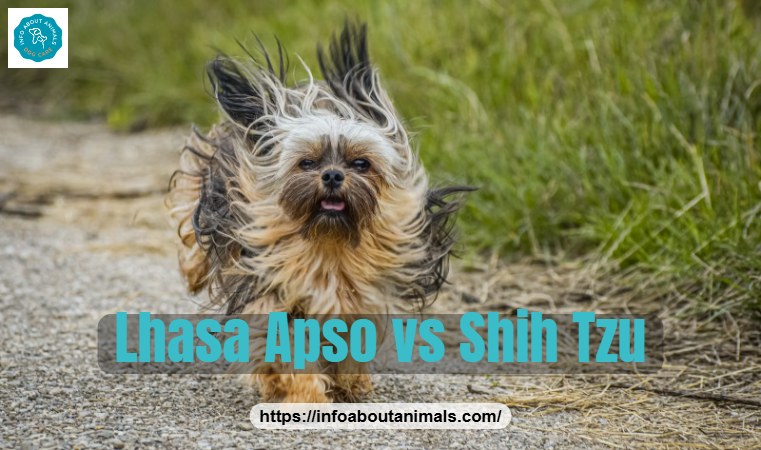
Lhasa Apso vs Shih Tzu – the Lhasa Apso and the Shih Tzu are probably the two most commonly confused small breeds in the world. Both are small, both have long, flowing coats in lots of colours, both carry their tails over their backs, and both trace back to Tibet. Plenty of people use the names interchangeably. But spend a week with each and you’ll see they’re very different dogs – especially in personality.
Quick answer: the Lhasa Apso has a longer muzzle, a harder coat and a watchdog personality – loyal, independent and wary of strangers. The Shih Tzu has a short, flat face, big round eyes, a softer coat and an outgoing, friendly nature. Lhasas suit adults and calm families; Shih Tzus are easier going with everyone.
Lhasa Apso vs Shih Tzu: Comparison Table
| Feature | Lhasa Apso | Shih Tzu |
|---|---|---|
| Origin | Tibet – monastery watchdog | China (from Tibetan dogs) – palace companion |
| Height | 10–11 in (25–28 cm) males, females slightly smaller | 9–10.5 in (23–27 cm) |
| Weight | 12–18 lb (5.5–8 kg) | 9–16 lb (4–7 kg) |
| Head and muzzle | Longer muzzle, narrower skull | Short, flat face, round head |
| Eyes | Dark, medium-sized, oval | Large, round, wide-set |
| Bite | Level or slightly undershot | Undershot (underbite) is normal |
| Coat | Heavy, straight, harder texture | Soft, silky, may be slightly wavy |
| Temperament | Loyal, independent, wary of strangers | Friendly, outgoing, affectionate with all |
| Trainability | Moderate – stubborn streak | Moderate – keen to please but can be stubborn with house-training |
| Watchdog ability | High | Low |
| Lifespan | 12–15 years | 10–18 years |
| Breathing issues | Rare | More common (brachycephalic) |
History: Guard Dog vs Palace Companion
The breeds are related. The Lhasa Apso is the older of the two, kept for centuries in Tibetan monasteries and noble homes as an indoor watchdog. Its job was to bark at anything unfamiliar and alert the larger mastiff-type dogs guarding outside. Tibetan leaders gave Lhasas as precious gifts to the Chinese imperial court, where they’re believed to have been crossed with small Chinese breeds such as the Pekingese. Refined in the palace over many generations, the result was the Shih Tzu – a name meaning “little lion”. So the Lhasa was bred to guard, while the Shih Tzu was bred purely for companionship.
How to Tell a Lhasa Apso From a Shih Tzu
The Lhasa Apso
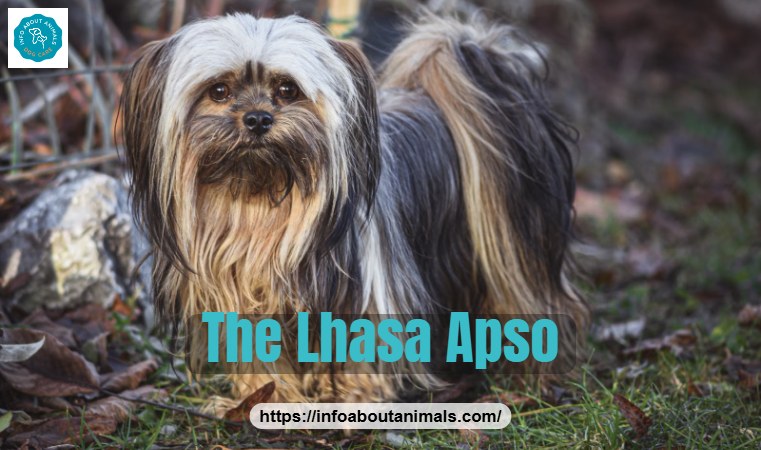
The head is the easiest giveaway. The Lhasa has a longer muzzle and a narrower skull, with the length of the muzzle roughly a third of the total head length. Its eyes are medium-sized and oval. Lhasas also tend to be a little taller and heavier, with a longer body that’s slightly longer than it is tall.
The Shih Tzu
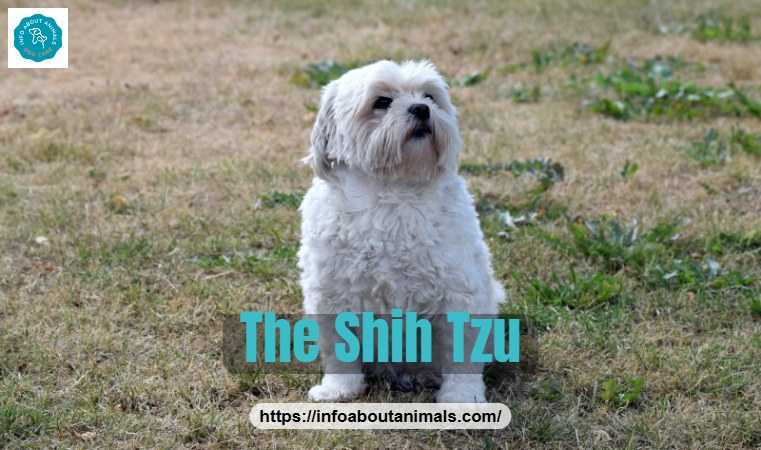
The Shih Tzu has a short, flat face, a rounder head and large, round, wide-set eyes, and a slight underbite is normal for the breed. Its body is a bit more compact. Many Shih Tzus have their topknot tied up, showing off that sweet, round face.
Coat texture
The coats feel different too. A Lhasa coat is heavy, straight and fairly hard to the touch. A Shih Tzu coat is usually softer and silkier and can have a slight wave. Both have double coats that grow continuously and shed very little, but both need serious grooming if kept long. See our Lhasa Apso haircut guide for practical styles.
Lhasa Apso vs Shih Tzu Temperament
Personality is where these breeds really differ. The Lhasa still thinks like a watchdog. It’s loyal and loving with its family, but often reserved or suspicious with strangers, independent, and quite happy to ignore commands it doesn’t see the point of. Lhasas can be less patient with rough handling, so they tend to suit adults or families with older, gentle children.
The Shih Tzu was bred to love everyone. Most are outgoing, cheerful and friendly with strangers, other dogs and children, and they usually want to please. If you want a dog that greets every visitor like a long-lost friend, that’s a Shih Tzu. If you want a little dog that tells you someone’s at the door, that’s a Lhasa.
Lhasa Apso vs Shih Tzu Health Differences
Both breeds are long-lived, but their health risks differ. The Shih Tzu’s flatter face makes it more prone to breathing problems (brachycephalic airway syndrome), heat intolerance and eye injuries from those prominent eyes. The Lhasa’s moderate muzzle means fewer breathing issues, but the breed is known for inherited kidney disease (renal dysplasia). Both share risks of dry eye, slipping kneecaps, back problems, allergies and dental disease. Read more in our Lhasa Apso lifespan guide.
Grooming and Shedding
Neither breed sheds much, which is why both are popular with tidy owners. But low shedding means high maintenance: hair that would fall out gets trapped in the coat and forms mats. A full-length coat needs daily brushing for either breed. Most pet owners keep their dog in a shorter “puppy cut” and visit a groomer every 4–8 weeks. Neither breed is truly hypoallergenic, but some allergy sufferers find low-shedding dogs easier to live with.
Training: Stubborn vs Sensitive
Both breeds are clever, but neither is a natural obedience star. Lhasas are independent thinkers: they learn quickly but decide for themselves whether a command is worth following. Short, fun sessions with food rewards work best, and repetition without reward bores them fast. Shih Tzus are more eager to please but can be sensitive and easily distracted, and many are notoriously slow to house-train. For both breeds, crate training, a consistent routine and lots of praise for toileting outside make a big difference.
Barking is the other training difference. A Lhasa is a natural alarm system and will bark at the doorbell, footsteps and passing dogs. Teach a “quiet” cue early, especially in apartments. Shih Tzus bark less and are more likely to greet a visitor than warn you about one.
Exercise and Daily Life
Both are small, adaptable breeds that do well in apartments. About 30 minutes of walking plus indoor play is enough for most adults. Lhasas tend to be slightly more active and enjoy a good sniff on walks; Shih Tzus are happy with shorter outings and plenty of lap time. In hot climates, be extra careful with the Shih Tzu, whose flat face makes it more prone to overheating. Walk both breeds early or late in summer, and keep their coats trimmed for comfort.
Living With Other Pets
Shih Tzus usually get along with almost anyone, including cats and other dogs. Lhasas can live happily with other pets they’re raised with, but some can be possessive of food, toys and their favourite people, and may snap if pushed. Feed pets separately and teach a Lhasa early that hands near its bowl mean good things.
Cost of Ownership
Purchase prices are similar for both breeds. The biggest ongoing cost is grooming: expect a professional groom every 4–8 weeks for either dog unless you learn to clip at home. Factor in dental care too, as both breeds are prone to tartar and may need regular professional cleanings over their long lives.
Which Breed Should You Choose?
| Choose a Lhasa Apso if… | Choose a Shih Tzu if… |
|---|---|
| You want a small, alert watchdog | You want a friendly, sociable companion |
| Your household is adults or older children | You have young children (with supervision) |
| You like an independent, dignified dog | You want a dog that loves everyone |
| You live in a hot climate (fewer breathing issues) | You can keep your dog cool and calm in heat |
Frequently Asked Questions
The Lhasa Apso has a longer muzzle, harder coat and a watchful, independent nature, as it was bred as a Tibetan monastery watchdog. The Shih Tzu has a short flat face, round eyes, a softer coat and a friendly, outgoing personality, as it was bred as a Chinese palace companion.
Neither is better overall. Lhasas suit adults wanting a loyal watchdog, while Shih Tzus suit families wanting a sociable, easy-going companion.
Yes. The Shih Tzu is believed to have been developed in China from Lhasa Apsos or similar Tibetan dogs crossed with small Chinese breeds like the Pekingese.
Shih Tzus are generally more tolerant and outgoing with children. Lhasas can be good with respectful older children but may not tolerate rough handling.
Both are long-lived. Lhasa Apsos typically live 12 to 15 years, and Shih Tzus 10 to 18 years according to the AKC.
Both shed very little, but their long coats mat easily and need regular brushing and grooming.
References
- American Kennel Club – Lhasa Apso
- American Kennel Club – Shih Tzu
- American Kennel Club – Lhasa Apso vs Shih Tzu: how to tell the difference
- PetMD – Lhasa Apso
- Shih Tzu – breed history
Written and medically reviewed by Dr. Muhammad Usman, DVM, RVMP, a licensed veterinarian in Pakistan and Qatar. This article is for general education and is not a substitute for an exam by your own vet.