If you’ve ever thought your French Bulldog’s old-man snoring was adorable, or that the little “piglet” snorts when he gets excited were just part of his personality, they’re probably not as cute as they seem. Most of those noises aren’t quirks at all – they’re French Bulldog breathing problems. They’re signs that air is struggling to get through your dog’s nose and throat.
In short: most French Bulldog breathing problems come from brachycephalic obstructive airway syndrome (BOAS), a set of airway defects caused by the breed’s flat face. Signs range from snoring and snorting to exercise intolerance, sleep problems, regurgitation and collapse in heat. Keeping your dog lean and cool helps, and surgery can make a big difference for moderate to severe cases.
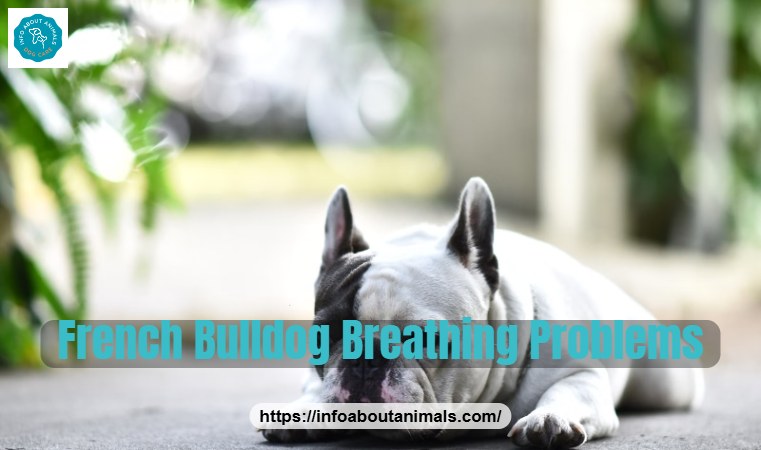
What Causes French Bulldog Breathing Problems? Meet BOAS
BOAS is the name for the group of airway problems seen in flat-faced breeds like French Bulldogs, Pugs and English Bulldogs. For Frenchie owners it’s probably the single most important health issue to understand. Research from the University of Cambridge has shown that a large proportion of French Bulldogs have some degree of airway obstruction, yet many owners don’t realise it because the signs look “normal for the breed”.
To picture BOAS, think about what breeding for a flat face has done. Over many generations, the bones of the muzzle and skull got much shorter. The soft tissues inside the nose and throat didn’t shrink at the same pace. So there’s now far more soft tissue than the space was designed for – a bit like trying to stuff a full-size duvet into a tiny sleeping bag.
The Main Causes of French Bulldog Breathing Problems
Narrow nostrils (stenotic nares)
Healthy nostrils are wide and round. In many Frenchies they’re narrow slits. Every single breath has to be pulled through an opening that’s too small, which means more effort and more noise.
Long, thick soft palate
The soft palate is the flexible part at the back of the roof of the mouth. In many French Bulldogs it’s too long and too thick, so it hangs down into the throat and flaps over the entrance to the windpipe. That’s what creates the classic snoring and snorting.
Crowded nasal passages
Inside the nose, the thin scroll-shaped bones (turbinates) that warm and filter air can be squashed together or grow backwards into the throat, blocking airflow even further.
Secondary changes over time
Other problems can appear as the dog gets older. When a dog has to pull hard to breathe, it creates strong negative pressure in the throat, and that suction drags soft tissue inward. Small pouches beside the vocal cords (laryngeal saccules) can turn inside out and block the airway. In severe cases the cartilage of the voice box weakens and partly collapses. Some Frenchies are also born with a narrow windpipe (hypoplastic trachea).
Signs of French Bulldog Breathing Problems
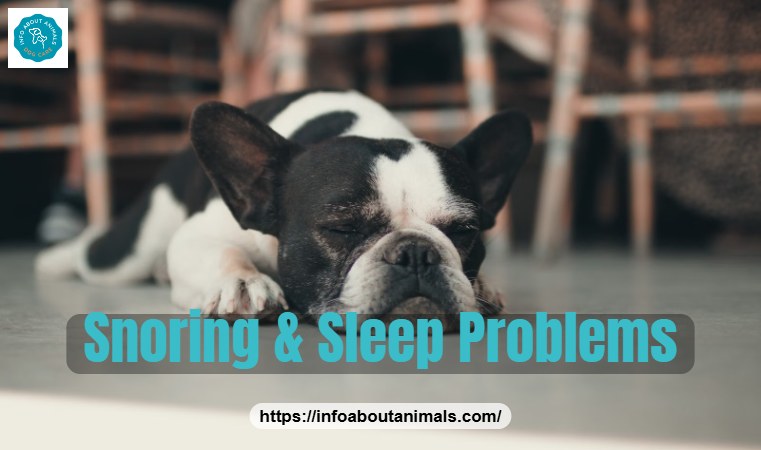
- Loud snoring, snorting or “honking” even when relaxed
- Noisy breathing that gets worse with excitement or exercise
- Getting tired quickly on walks or lagging behind
- Breathing with the mouth open at rest
- Sleeping sitting up or with the chin propped on a toy
- Waking suddenly, gasping for air
- Gagging, regurgitating food or bringing up foam
- Struggling badly in warm weather or after mild exercise
- Blue or grey gums or collapse (an emergency)
BOAS doesn’t just affect breathing. Many affected dogs regurgitate or vomit after eating, because the pressure changes from straining to breathe pull the stomach and oesophagus out of position. Sleep is often disrupted too: some Frenchies can only sleep sitting up or with their chin resting on something, because lying flat makes breathing harder, while others wake suddenly gasping.
Why BOAS Makes Heat So Dangerous
Dogs cool themselves by panting, and a dog with a blocked airway can’t pant efficiently. On top of that, hard panting makes the throat tissues swell, which narrows the airway even more. That’s why French Bulldogs are among the breeds at highest risk of heat stroke. If you live somewhere hot, read our guide to French Bulldog heat stroke signs and keep it handy.
How Vets Diagnose BOAS
Your vet will start by listening to your dog breathe at rest and after a short walk, checking the nostrils and asking about snoring, sleep and regurgitation. Some clinics use a standard exercise test as part of the Kennel Club and University of Cambridge Respiratory Function Grading (RFG) scheme, which grades dogs from 0 (unaffected) to 3 (severely affected). To see the soft palate, saccules and larynx properly, the vet needs to look down the throat under a short anaesthetic, sometimes with a CT scan of the nose.
| RFG grade | What it means | Typical advice |
|---|---|---|
| Grade 0 | No signs of BOAS | Keep lean, normal care |
| Grade 1 | Mild signs, not affecting exercise | Monitor, keep lean and cool |
| Grade 2 | Moderate signs, affects exercise or heat tolerance | Discuss treatment or surgery with your vet |
| Grade 3 | Severe signs, distress even with light exercise | Surgery usually recommended |
Treatment for French Bulldog Breathing Problems
Lifestyle changes
- Get your dog lean. Fat builds up around the throat and chest, so an overweight Frenchie has even less room to breathe. Weight loss alone can make a clear difference. Our guide to the best food for French Bulldogs can help.
- Use a harness, not a collar, so there’s no pressure on the windpipe.
- Avoid hard exercise in warm weather and keep walks short and slow.
- Keep your dog cool with air conditioning, shade and cooling mats.
- Reduce stress and over-excitement, which both make breathing harder.
BOAS surgery
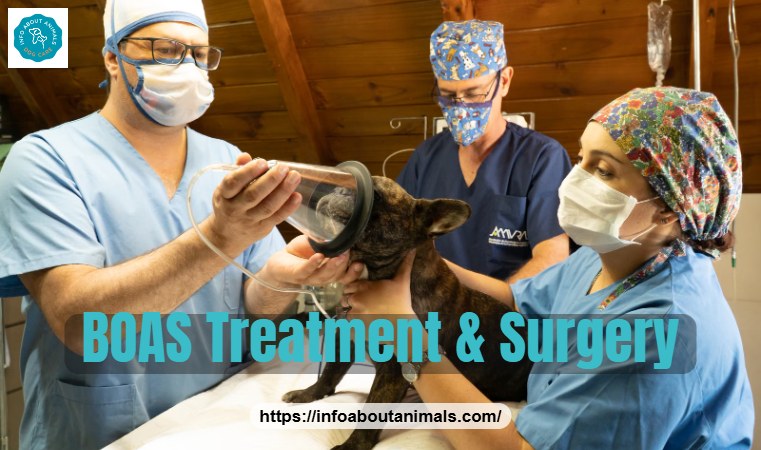
For dogs with moderate or severe signs, surgery is often recommended. The usual operation widens the nostrils and shortens and thins the soft palate. If the laryngeal saccules have turned out, they’re removed at the same time, and some referral centres also treat the nasal turbinates. Many dogs breathe, sleep and exercise much better afterwards. Surgery tends to work best in young adult dogs, before secondary changes like laryngeal collapse set in. As with any airway surgery, there are risks, especially around anaesthesia and recovery, so it should be done by a vet with experience in brachycephalic patients.
Buying a French Bulldog? How to Lower the Risk
If you’re thinking about getting a Frenchie, choose a breeder who tests their dogs under the RFG scheme and breeds from dogs with grade 0 or 1. Look for puppies whose parents have open nostrils, a slightly longer muzzle and a normal body weight. Be cautious with “extreme” looks, including very flat faces and tiny “teacup” sizes – see our article on the teacup French Bulldog to understand why.
When to See a Vet Urgently
Go to a vet straight away if your French Bulldog has blue, purple or grey gums, collapses, can’t settle because it’s fighting for air, makes a high-pitched squeaking sound when breathing in, or is breathing hard in the heat and not improving with cooling. These French Bulldog breathing problems can turn into a life-threatening airway blockage within minutes. On the way, keep your dog calm and cool, and don’t put anything around its neck.
For milder signs like snoring, snorting or getting tired on walks, book a routine appointment and ask for an airway assessment. Bring a short phone video of your dog breathing while asleep and after a walk – it helps your vet a lot.
Frequently Asked Questions
Loud breathing in French Bulldogs is usually caused by BOAS: narrow nostrils, a long soft palate and crowded nasal passages make air turbulent and noisy. It is common, but it is not normal, so ask your vet to check your dog.
Snoring is very common in French Bulldogs, but it is a sign that the airway is partly blocked. Occasional light snoring may be mild, while loud nightly snoring, gasping or sleeping sitting up are signs of more significant BOAS.
Many Frenchies with mild BOAS live a normal lifespan of around 10 to 12 years. Severe untreated BOAS can shorten life and greatly reduce quality of life, while timely surgery can improve both.
The cost varies widely by country and clinic, from a few hundred to several thousand dollars depending on which procedures are needed and whether a referral hospital is used. Ask your vet for an estimate after an airway check.
Most dogs breathe much better after BOAS surgery, but their airway will never be the same as a long-nosed dog. Keeping them lean and cool remains important for life.
Surgery is often done in young dogs, frequently between about 6 months and 2 years old, before secondary changes develop. Some vets correct narrow nostrils at the time of neutering.
References
- University of Cambridge – BOAS research group
- University of Cambridge – Scheme launched to improve health of French Bulldogs, Pugs and Bulldogs
- The Kennel Club – Respiratory Function Grading Scheme
- Today’s Veterinary Practice – An overview of brachycephalic obstructive airway syndrome
- Royal Veterinary College – Flat-faced dogs at increased risk of heat stroke
Written and medically reviewed by Dr. Muhammad Usman, DVM, RVMP, a licensed veterinarian in Pakistan and Qatar. This article is for general education and is not a substitute for an exam by your own vet.